
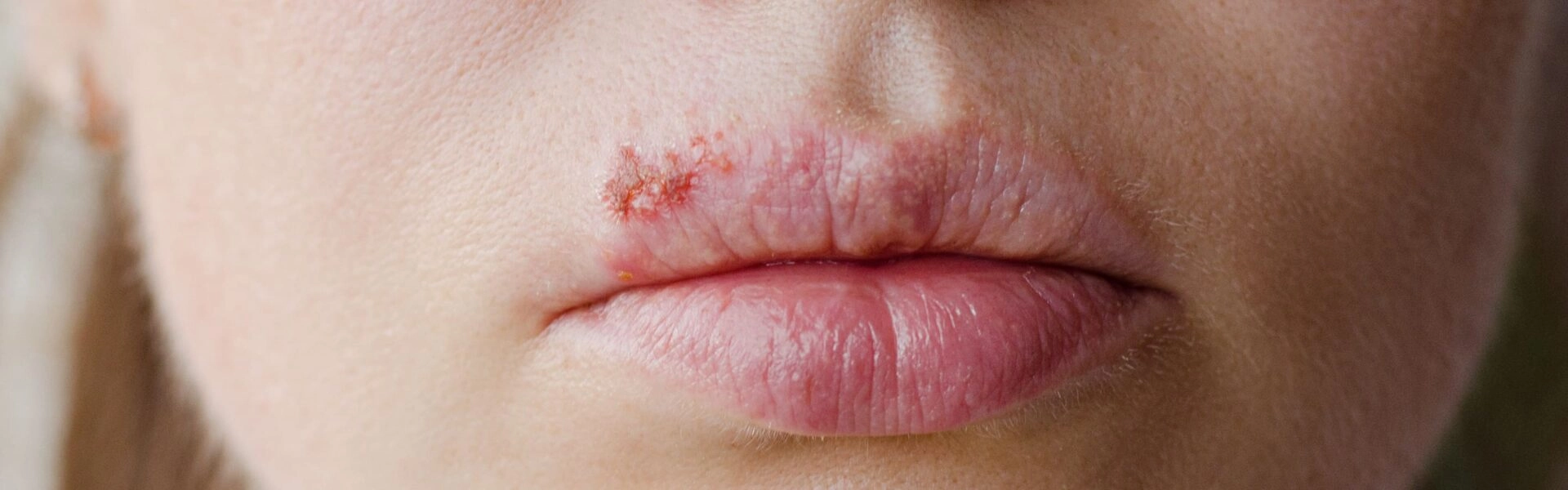
What is a cold sore (or herpes labialis)?
A cold sore is also known as ‘herpes labialis’. It is a skin condition, which means it affects the skin, but it is also viral as it is caused by a virus. A cold sore is easily recognisable by its location, as it usually appears on one side of the mouth, at the junction between the skin and the mucous membrane of the lip. It is characterised by its distinctive redness and its ‘cluster-like’ shape.
Is it a cold sore or a mouth ulcer?
Because they occur in the same area of the body, it is common to confuse a cold sore with a mouth ulcer. Although they have some similarities, they are two very different disorders. Unlike a cold sore, a mouth ulcer appears on the mucous membranes inside the mouth (gums, tongue, inside of the cheeks, etc.), rather than on the outside. It appears as a pale spot with a red border and heals within 10 to 15 days.(1)
What causes a cold sore?
A cold sore, is caused by the highly contagious HSV-1 virus. It is estimated that 90% of adults carry this virus in a latent state, and that it only becomes active again in 20% of cases.(2) The dormant virus can be reactivated by a wide range of factors.
The stages of a cold sore
A cold sore, or herpes labialis, is caused by the virus multiplying. It is important to recognise the signs so that the appropriate treatment can be provided.
The first symptoms, which signal the onset of a cold sore, are a sensation of warmth, redness, tightness or tingling, most often around the mouth, where the cold sore will form. Note that herpes labialis is contagious from these first symptoms.
A few hours or a few days after they first appear, the cold sore will develop. It consists of a cluster of blisters situated on the reddened area. The fluid inside these blisters, or lesions, is rich in viruses. A mild fever may develop with the sore.
After a few days, the blisters burst and scabs form before falling off; the sore is then completely healed and the virus can no longer be passed on.
It is following infection through direct contact (such as kissing or sharing toiletries) or via saliva that a person may develop a cold sore. Here are the triggers and a few simple steps to prevent spreading the infection to those around you.
Triggering factors
Several factors can trigger the onset of herpes labialis. To reduce the risk of a recurrence, do your best to protect yourself from these factors.
In the event of an infection accompanied by a fever or trauma, during surgery, or when taking corticosteroids or immunosuppressants; during menstruation; after an episode of stress or fatigue; or after exposure to the sun or cold, the virus can reactivate and trigger the appearance of a cold sore. That's why it's a good idea to try to reduce the causes of stress and anxiety and make sure you get enough rest through quality sleep.
Also, be sure to avoid sun exposure, or, if you do go out in the sun, use a lip balm with UV filters. If a cold sore does appear, keep in mind that it is highly contagious, so be sure to follow these hygiene tips.
Best practices
Understanding the causes of cold sores, their warning signs, and their triggers is essential to knowing how to treat them. Now is the time to take concrete steps to promote healing of cold sores and to minimize the risk of transmission and recurrence.
Avoid transmitting the herpes virus
Because the virus is highly contagious, anyone with a cold sore should be careful not to kiss anyone, especially newborns or people with weakened immune systems.
Thoroughly clean your personal items and toiletries, your glassware and silverware, and any other items that come into contact with the cold sore, and avoid sharing them.
Wash your hands thoroughly with soap before and after each treatment, or if you touch the sore.
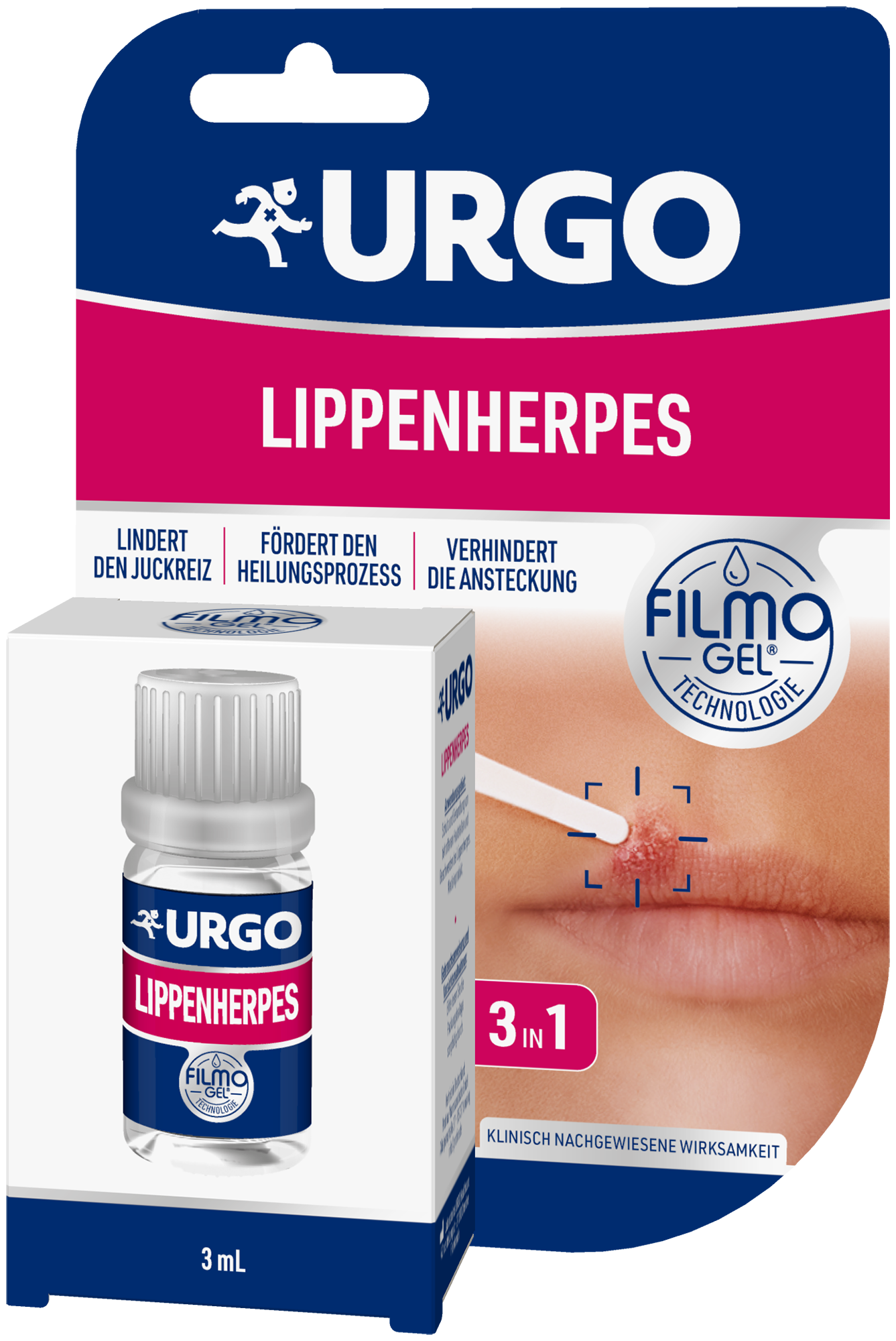
The URGO product you need: URGO Filmogel® Cold sore
Promote healing of the cold sore
The cold sore is contagious—not only to others, but also to yourself. In fact, contact with the lips and then the eyes can cause inflammation of the cornea, known as keratitis. To prevent this, don't rub your eyes after touching your cold sore. Even though it may be tempting, don't pick at the sores or scabs, and don't try to cover up your cold sore with make-up, you could slow down the healing process and contaminate your make-up tools. It is also pointless to use antibiotic treatments, which are ineffective against viral infections.
To help a cold sore heal and scab over, we recommend using URGO Filmogel® Cold Sore (ages 6 and over). This product relieves the tingling, itching, and burning associated with cold sores. With Filmogel®, you can also prevent the spread of herpes labialis from the very first signs until the sore has completely disappeared, and promote healing.
Although it may look unsightly, if treated properly, a cold sore will last only approximately ten days. During your treatment, be sure to support your immune system with a varied and balanced diet to help it fight off the virus and prevent a recurrence. For this, eat foods rich in copper (liver, cashews), iron (blood sausage, white beans), selenium (Brazil nuts, shellfish), and vitamins A (fish liver, carrots), B6 (whole grains, pistachios), B9 (kidney beans, lentils), B12 (kidneys, anchovies), C (citrus fruits, berries), and D (mushrooms, fish).(3)
Should I see a doctor if I have a cold sore?
In most cases, cold sores goes away on their own with a little patience and proper care. However, there are situations in which you may need to consult your doctor. This is particularly true if healing takes more than 10 days, if you experience more than 6 recurrences per year, or if you have a high fever, severe pain, or symptoms affecting your eyes.(4)
To learn more about cold sores, check out our responses to common misconceptions in this "Fact or Fiction" video: Fact or Fiction: Cold sores | URGO