
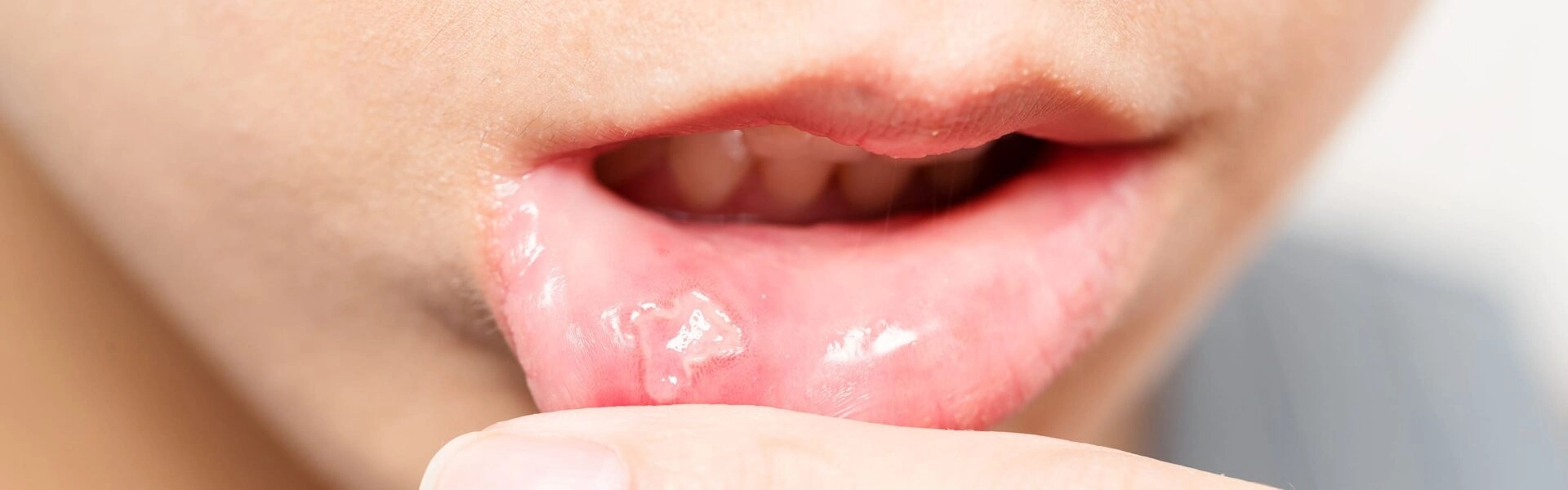
Mouth ulcers: where can they appear?
Mouth ulcers can appear on any part of the oral mucosa, but certain areas are affected more frequently than others.
Lesions are often found on the tongue, the inside of the lips or cheeks, or the roof of the mouth. These areas are more prone to injury, such as accidental bites, overly vigorous brushing, or wearing dental braces.
Mouth sores can also form on the gums, floor of the mouth, or throat. These areas are more susceptible to infections, allergies or systemic diseases.
How do mouth ulcers form?
The development of mouth ulcers follows four stages:
- The prodromal phase, which precedes the appearance of the ulcer by a few hours or days, and is characterised by a burning, stinging or itching sensation at the site where the mouth ulcer is about to form;
- The pre-ulcerative phase, which involves erosion of the mucous membrane, causing it to become red and tender;
- The ulcerative phase, which is the most painful phase, during which the ulcer deepens and becomes covered with a whitish or yellowish coating;
- Healing takes place gradually, leaving no trace, except in cases of major mouth ulcers.
What is a mouth ulcer?
A mouth ulcer is an inflammation of the oral mucosa, which manifests as superficial sore that is painful and sensitive to touch. These small white sores, surrounded by a red ring, are particularly painful when eating and when brushing your teeth.
Minor mouth ulcers are the most common. They are less than 10 mm in diameter, occur singly or in small clusters, and are usually found on the tongue, lip or cheek. They heal spontaneously within one to two weeks, leaving no scar.
Mouth ulcers: treatment of mouth ulcers with URGO Filmogel® Mouth ulcers
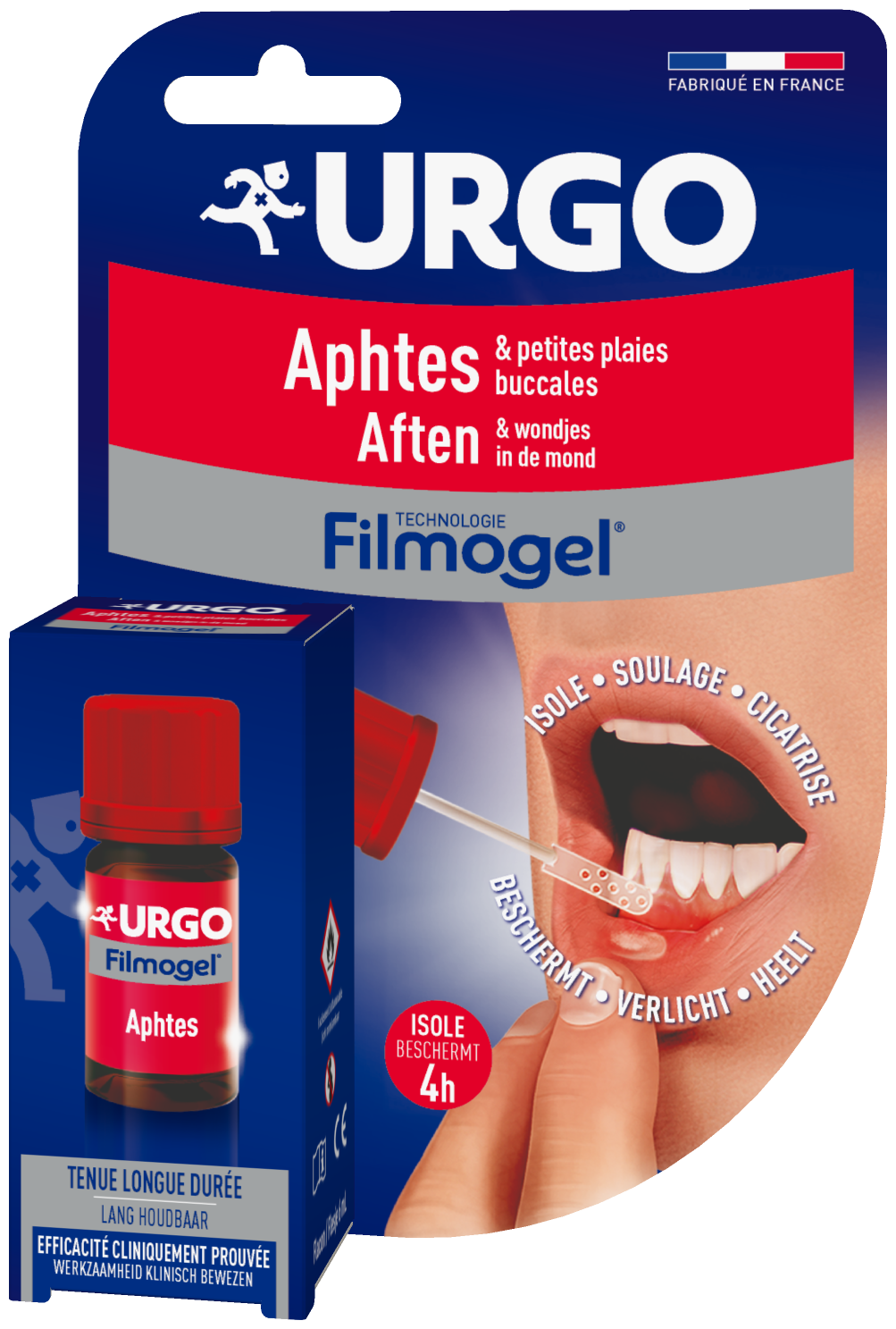
If, despite these precautions, you do develop mouth ulcers, there is a treatment available: URGO Filmogel® Mouth ulcers. This is a liquid gel which forms a protective film when applied. It isolates the mouth ulcer from external irritants and provides immediate pain relief, even while eating. It also promotes wound healing by creating a moist environment.
Mouth ulcers are common, painful and uncomfortable sores. If you have minor mouth sores, URGO Filmogel® Mouth Ulcer will help you smile again!
Mouth ulcers: causes and people at risk
The exact cause of mouth ulcers is not known, but there are risk factors that can contribute to their development or recurrence:
- Stress, which weakens the immune system and compromises the mucous membrane;
- A diet that is too acidic, spicy, salty or sweet, or that contains allergens or irritants (nuts, citrus fruits, chocolate, cheese, coffee, wine);
- Injuries caused by a bite, a toothbrush, braces, a piercing or dental treatment;
- Hormones, which can influence mouth ulcers in women (menstruation, pregnancy, menopause);
- Medicines that have side effects on the mucosa (anti-inflammatory drugs, antibiotics, beta-blockers, chemotherapy drugs);
- Deficiencies in iron, vitamin B12, folic acid or zinc, which damage the mucous membrane;
- Conditions associated with mouth ulcers (Behçet’s syndrome, Crohn’s disease, Sjögren’s disease, HIV, lupus).
Mouth ulcers are not contagious, unlike cold sores, which are caused by the herpes virus. There is therefore no risk of transmission through kissing, sharing cutlery or glasses, or contact with saliva.