
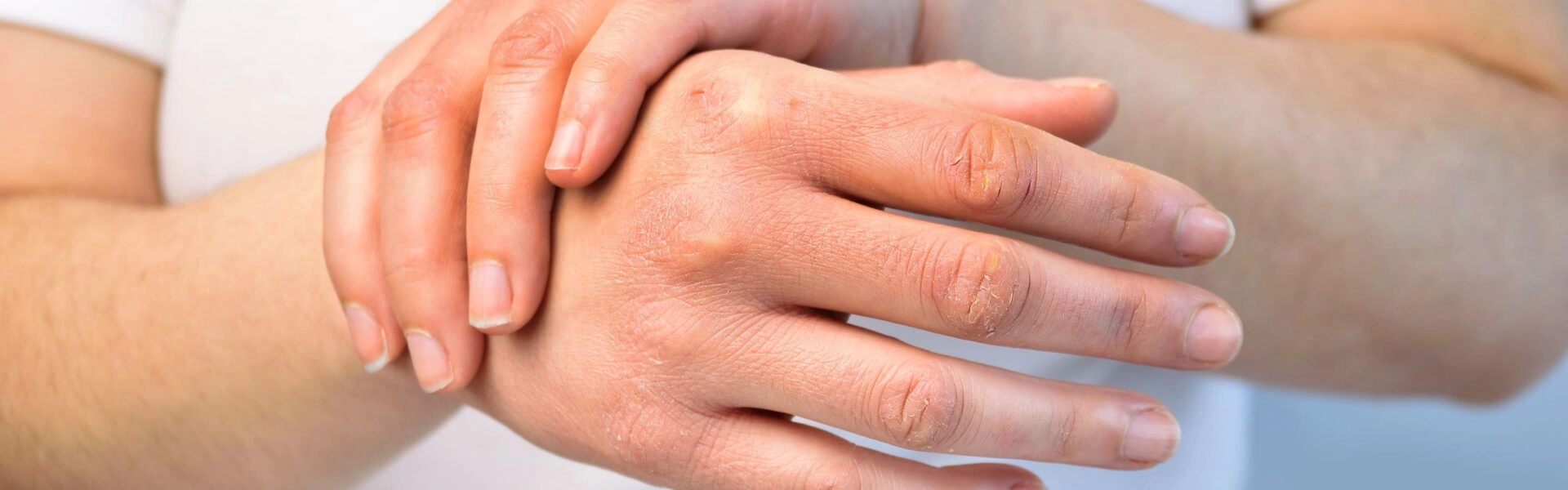
How do cracks appear on hands and feet?
Certain times of year are more prone to the formation of cracks.
When it comes to our hands, winter is the time of year when they are particularly vulnerable, especially because of the cold. Indeed, low temperatures cause the body to prioritise blood flow to vital organs (heart, lungs, etc.) rather than to the extremities, which can lead to cracked hands. And despite its apparent robustness, the skin of the hands is more fragile than you think.
As for feet, it is in summer that they are particularly prone to cracking. This is particularly the case when walking barefoot or in open-toed shoes that do not provide adequate support for the foot. Indeed, exposure to the air and friction can lead to cracked heels, as this area is subject to greater strain. It is therefore important to take great care of your feet and hands during these times to prevent chapping and cracking – but that’s not all.
In everyday life, certain occupations and activities are more likely to lead to cracks appearing on the hands. Manual trades, as well as DIY at home or even certain activities such as housework, expose the hands to numerous repeated stresses. Factors that can contribute to the appearance of cracked fingers.
Protect your feet and hands from cracks!
During the winter months, protect your hands from the cold and wind by wearing gloves and using hand creams to prevent dryness. Be careful, however, of sudden changes in temperature, which can damage your skin: resist the urge to plunge your hands into hot water. Try warming up gradually by placing your hands near a heat source or making yourself a nice cup of herbal tea.
During the summer months, try not to expose your feet to sand or sea water for too long. If your feet are particularly prone to cracking, opt for closed shoes rather than open ones whenever possible. If you have cracked heels, don’t forget to moisturise them with a foot cream designed for cracked heels.
If you’re doing manual work, DIY or housework, make sure you protect your hands with suitable gloves to minimise exposure to chemicals and friction, which can cause cracks in your fingers. Furthermore, try to avoid using hand sanitiser as much as possible, as it tends to irritate the epidermis.
Make sure you dry your hands thoroughly when they’re damp!
Did you know? Contrary to what one might think, contact with water – particularly hot water – dehydrates the skin. Therefore, try to avoid placing your hands in water too often, or taking baths that are too long, as these could dry out your skin.
If your hands or feet are wet – whether from water or sweat – you must dry them thoroughly, particularly before exposing them to the cold or wind. It is also recommended that you pat your skin dry rather than rub it, so as not to irritate it.
Moisturise your feet and hands at the first signs of dry skin
If your skin feels tight, if you notice flaking – that is, if your skin is peeling – a loss of elasticity, or any other signs of dehydration, you need to take action. To prevent cracked hands and dry skin, it is important not only to drink more water during these periods but also to apply moisturising creams to rehydrate the skin.
Use URGO Intense Repair damaged hands to moisturise immediately and for 24 hours. This cream, containing purified honey and 98 per cent naturally derived ingredients, promotes skin regeneration and helps prevent the appearance of cracks. Apply every morning or after every hand wash.
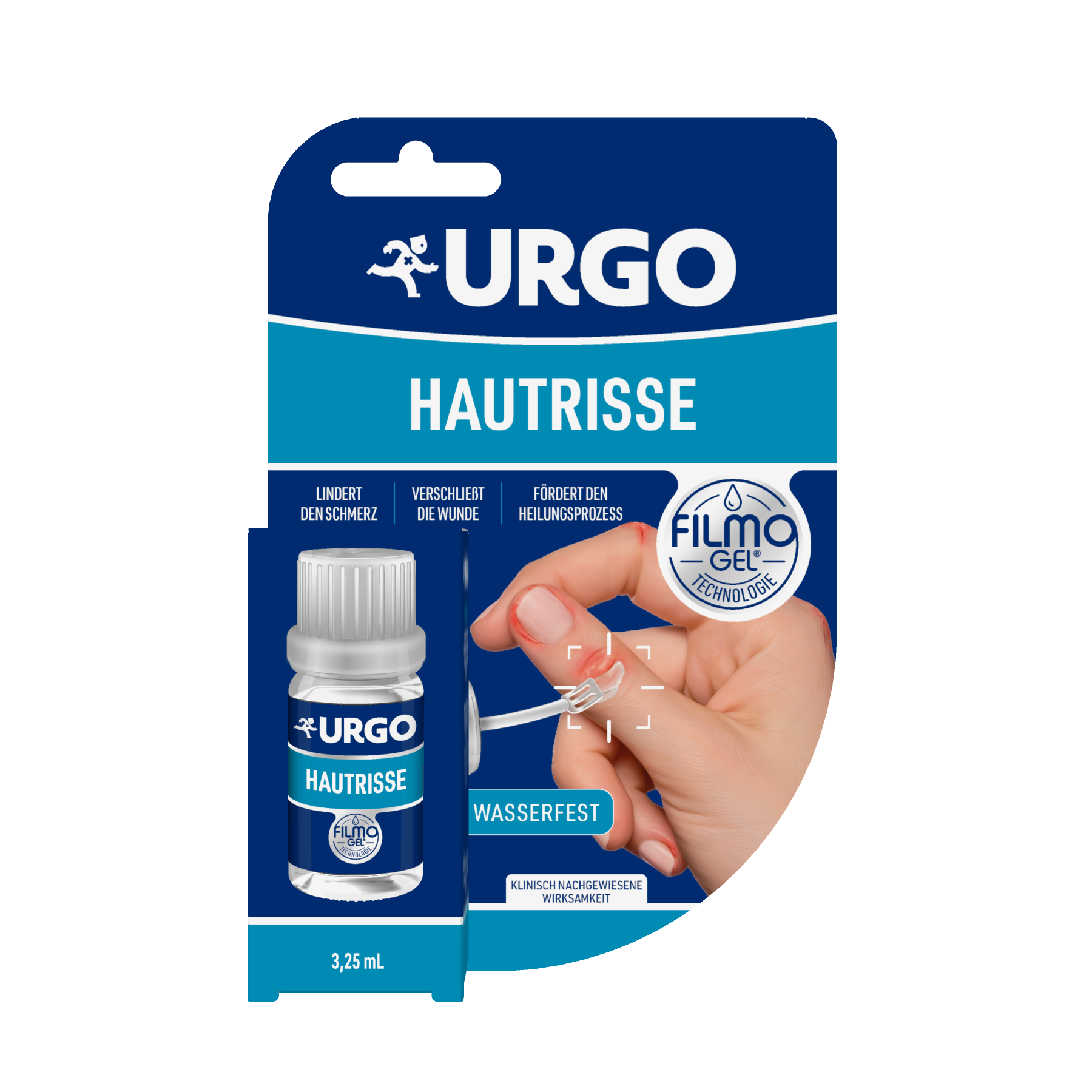
The URGO product you need: URGO Filmogel® Cracked Hands
URGO products to treat cracks
Untreated and unmoisturised dry skin leads to cracks and deep fissures in the skin. If you have cracked hands, apply URGO Cracked skin, Filmogel® – hands to your hands to help restore the skin’s first line of defence. This liquid dressing relieves pain and promotes the healing of cracks on the hands. A transparent and waterproof care product that will make you forget about your pains.
If you have cracked heels, apply URGO Cracked skin, Filmogel® – heels to your feet; on contact with the air, it will form a transparent protective film that soothes, protects and prevents the crack from reopening.
Cracks can cause discomfort and pain, so don't wait to pamper your skin. By bearing in mind the right ways to protect and moisturise your skin, you’ll be able to prevent and treat cracked hands and feet.
Good to know: a diet rich in vitamins A, B2, B3, B8, iodine and zinc will contribute to better healing.