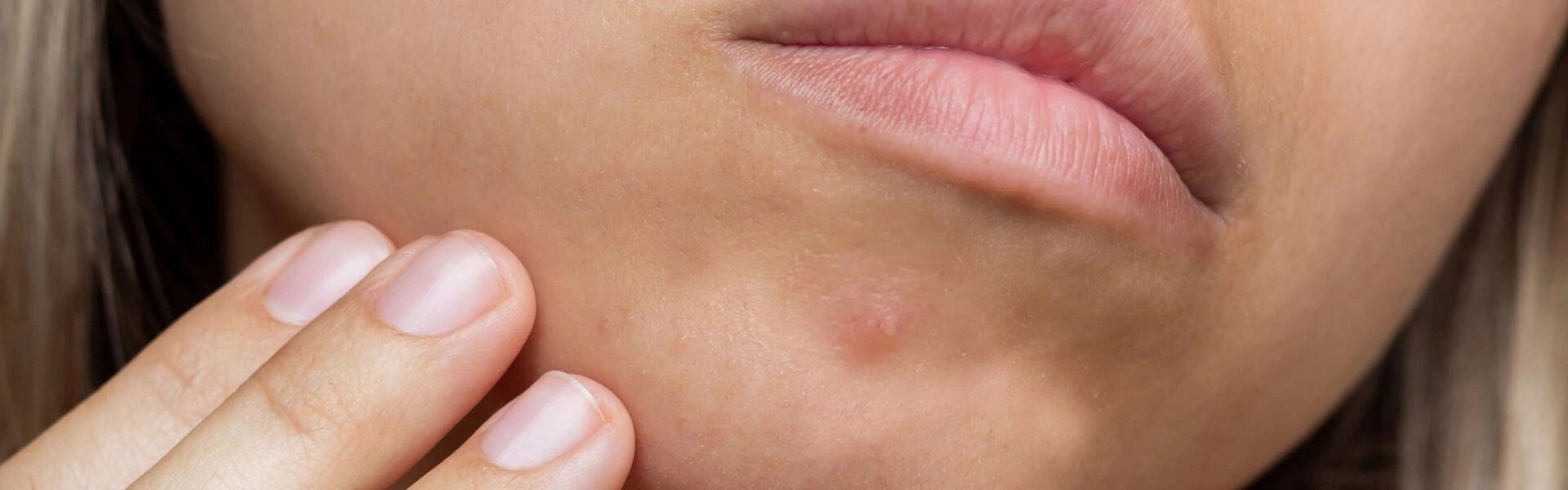

It is within the pilosebaceous follicles that hairs grow and where sebum is secreted to moisturise and protect the epidermis. In acne, sebum is produced in excess, is too thick or is altered. This facilitates the proliferation of bacteria, particularly P. acnes, an imbalance in the skin’s flora (or skin microbiota) and inflammation, all of which lead to the appearance of spots.
There are two main forms of acne, distinguished by the types of spots visible on the skin:
- Retentional acne is characterised by oily, shiny skin, enlarged pores, ‘blackheads’ (comedones) and small cysts (microcysts) beneath the skin. The skin is not red or inflamed.
- Inflammatory acne is characterised by red spots (papules) and pus-filled spots (pustules). Sometimes lumps also appear beneath the skin (nodules, cysts). In teenagers, this more severe form of acne can leave scars.
These two forms of acne often occur simultaneously in the same person, with inflammatory acne generally following on from non-inflammatory acne.
What causes acne?
Often, several factors combine to cause acne.
Genetic predisposition plays a part: if your parents had acne, you are more likely to suffer from it too.
Acne is also strongly linked to sex hormones: normal fluctuations in hormone levels throughout life, as well as hormonal imbalances, can increase sebum production.
Finally, there may be lifestyle factors that contribute to acne, such as stress, hygiene or skincare routines, diet, sun exposure, etc.
It is worth noting that in men, acne is more common during adolescence and is linked to male hormones, whereas in adulthood it is more often due to lifestyle factors. However, acne that persists or develops in adulthood primarily affects women.
Hormonal imbalances
Acne mainly occurs when the production of sex hormones changes and the skin is sensitive to this variation.
Consequently, this hormonal acne often affects boys during adolescence, when the production of the male hormone, testosterone, rises sharply after puberty.
It also affects young girls and women due to fluctuations in the levels of the female hormone, oestrogen, during the menstrual cycle. It can also develop during pregnancy or at the menopause, when oestrogen levels drop.
Certain hormonal disorders (polycystic ovary syndrome, adrenal gland disorders, etc.) or hormonal treatments such as the progesterone-based contraceptive pill can also contribute to acne.
Excess sebum
Hormonal changes are responsible for an increase in sebum production, the primary mechanism leading to the development of acne.
This excess sebum, or seborrhoea, results in oily skin, particularly on the face, and sometimes also on the chest or upper back. The sebum also thickens, which prevents it from being properly expelled to the skin’s surface: the ducts of the pilosebaceous follicles tend to become ‘blocked’. This initially results in very small blackheads, or micro-comedones, particularly on the nose and chin.
Excess sebum also causes the proliferation of Propionibacterium acnes (also known as Cutibacterium acnes) or P. acnes, a bacterium normally present on the skin that feeds on the fatty acids in sebum.
Furthermore, the composition of sebum changes and contains more irritating fatty acids. The proliferation of bacteria triggers an inflammatory reaction which weakens the pilosebaceous follicles.
Various types of spots may then develop: blackheads, papules, pustules, microcysts, nodules, etc.
Factors contributing to acne
Stress
Several studies involving people with acne suggest that stress exacerbates acne by triggering breakouts. This is because the skin is criss-crossed by a network of nerves that communicate with the pilosebaceous follicles.
Stress increases the production of cortisol, known as the ‘stress hormone’, and the activity of neurotransmitters such as ‘substance P’ in the skin. All of this leads to overproduction of sebum, increased skin inflammation and/or a reduction in the skin’s natural defences against germs.
Acne may also be a source of stress in its own right, which can lead to a vicious circle between stress and acne.
Hygiene habits, skincare, cosmetics
Let’s make this clear straight away: acne is not caused by poor hygiene. On the contrary, it is actually exacerbated by aggressive cleansing and repeated exfoliation, which damage the skin barrier and disrupt the skin’s microbiome. Shaving too vigorously or with blunt blades can also irritate the skin, trap hairs in the follicular channels and facilitate the growth of bacteria.
Skincare products or make-up such as foundation can also block pores: this is why some are formulated to be ‘non-comedogenic’.
Certain hair care and styling products containing oily compounds can also contribute to acne around the face.
Generally speaking, using skincare products or cosmetics that are too oily or of poor quality – especially if make-up is not thoroughly removed every day – can contribute to the development or worsening of acne. This is sometimes referred to as ‘cosmetic acne’.
Diet
Does chocolate cause acne? It’s not clear. Scientific studies do not all agree on the subject, but they suggest that certain foods may play a role in acne, with effects varying from person to person. Many people prone to spots notice that their eating habits influence the appearance of blemishes.
Factors in the diet that may contribute to acne include:
- a diet low in vitamins and antioxidants, which are found in particular in fresh fruit and vegetables;
- the consumption of skimmed cow’s milk – as opposed to dairy products such as yoghurt or cheese;
- excessive consumption of sugary foods and drinks or those containing rapidly absorbed carbohydrates, known as ‘high glycaemic index’ foods: white bread, white rice, etc.
In any case, it is important to opt for a balanced diet to maintain healthy skin.
Smoking and pollution
In adults, smoking can weaken the skin and constrict the pores, preventing sebum from draining properly, which can lead to occlusive acne.
Air pollution in large cities (exhaust fumes, hydrocarbons, nitrogen dioxide, fine particles, dust, etc.) could also ‘pollute’ the skin, oxidise sebum and cause inflammation that promotes the formation of spots.
Sunlight and humidity
Sunlight can temporarily improve acne in some people: UVA rays and visible sunlight have anti-inflammatory effects on the skin. However, for more than half of those with acne, sunlight makes spots worse.
This is because UVB rays cause skin inflammation and increase sebum production. The skin also thickens to protect itself from the sun, which makes it easier for the pilosebaceous follicles to become blocked.
After any period of exposure, for example after the summer, a ‘rebound effect’ of acne is often observed following an initial improvement.
Furthermore, the sun can cause hyperpigmentation in people with darker skin. Ambient humidity and excessive sweating may also contribute to the development of acne spots.
Certain medicines
Many treatments have adverse effects on the skin.
Certain hormone-based medicines, such as the progesterone-based contraceptive pill, as well as cortisone, immunosuppressants, lithium and certain anti-anxiety drugs, antihypertensives and antidepressants, can cause or worsen acne.
This is referred to as ‘medication-induced acne’.
If you notice blemishes appearing on your skin whilst you are taking medication, particularly if you have never had acne before, speak to your doctor.